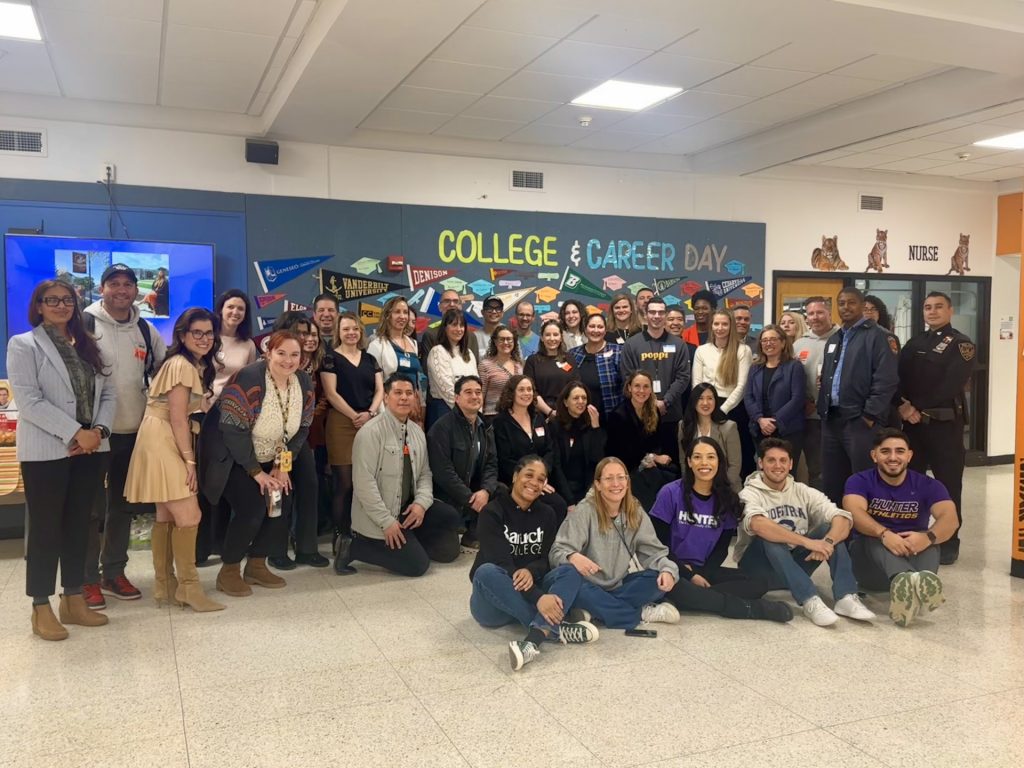
Forty Professionals Share Work Experiences on Hommocks Career Day
Nearly 40 professionals filled classrooms across Hommocks Middle School, turning the building into something like a living career map for seventh and eighth graders. In room after room, students leaned forward with questions as community members shared what they do, how they got there, and what they have learned along the way.
The presenters, many of them Hommocks parents, represented an extraordinary range of fields, from biomedical engineering and medical anthropology to policing, real estate, law, and professional sports technology, just a sampling of the many careers represented throughout the building that day. Moving from room to room, students had the chance to hear directly from people whose work shapes industries, communities, and lives.
Guidance counselor Rob Fischer says middle school is the perfect time to begin making those connections between school and the wider world.
“Students often ask why they need to learn something,” he said. “Hearing directly from people in different careers helps answer that question.”
Students were also asked to listen closely and reflect on what they learned throughout the day. After each session, they completed a form noting the type of training or education required for the career they heard about, one thing they found interesting, and whether they might consider that type of job themselves.
One student, Jen, wrote that she found the work of a forensic scientist especially interesting. “I find it interesting that there are so many different directions you can go in forensics,” she wrote, adding that it is a career she would consider.
Some presentations offered powerful real-world examples.
lene Spanakos Weis, Assistant General Counsel and Senior Vice President at Mastercard and a parent of three children who attended or currently attend Mamaroneck schools, spoke about her work helping the company acquire technology firms that expand Mastercard’s global reach and services. She invited one of her bilingual colleagues, Carla, to join the session in Spanish, calling bilingualism a “superpower” and emphasizing how valuable it can be in today’s workplace.
When a student asked Carla what the hardest part of her job is, she answered candidly that balancing executive expectations on tight timelines while maintaining work-life balance can be challenging. She followed that with advice for the students in the room: just because something is hard does not mean it is not worth doing. She encouraged them to always try their best, noting that success is not always guaranteed, but effort and persistence matter.
Police Officer Jason Sanchez also fielded questions from curious students, including one about the difference between patrol work and being a detective. Sanchez explained that he currently serves on patrol, responding directly to calls and helping people in immediate need.
For Kelleny Berchuck, a biomedical engineer who grew up in rural Pennsylvania, the day represented something she wished she had experienced as a student. Growing up, she told students, she and her classmates had little exposure to the wide range of careers available to them or opportunities to meet people working in those fields.
Across all the sessions, one message came through clearly. Most careers do not follow a straight path. Presenters encouraged students to stay curious, explore different interests, and remain open to opportunities they may not even know exist yet.